

A pretend post office can begin with two toy homes and a note that needs somewhere to go. The interesting job is deciding which destination matches the mark on the outside, delivering the note and choosing what happens when the destination changes.
This version uses invented places for toy characters. It does not need real names, home addresses, stamps, a printer or a special post-office set. Start with one short delivery round; your child can change its rules or leave the game whenever they choose.
Give two toy homes different marks
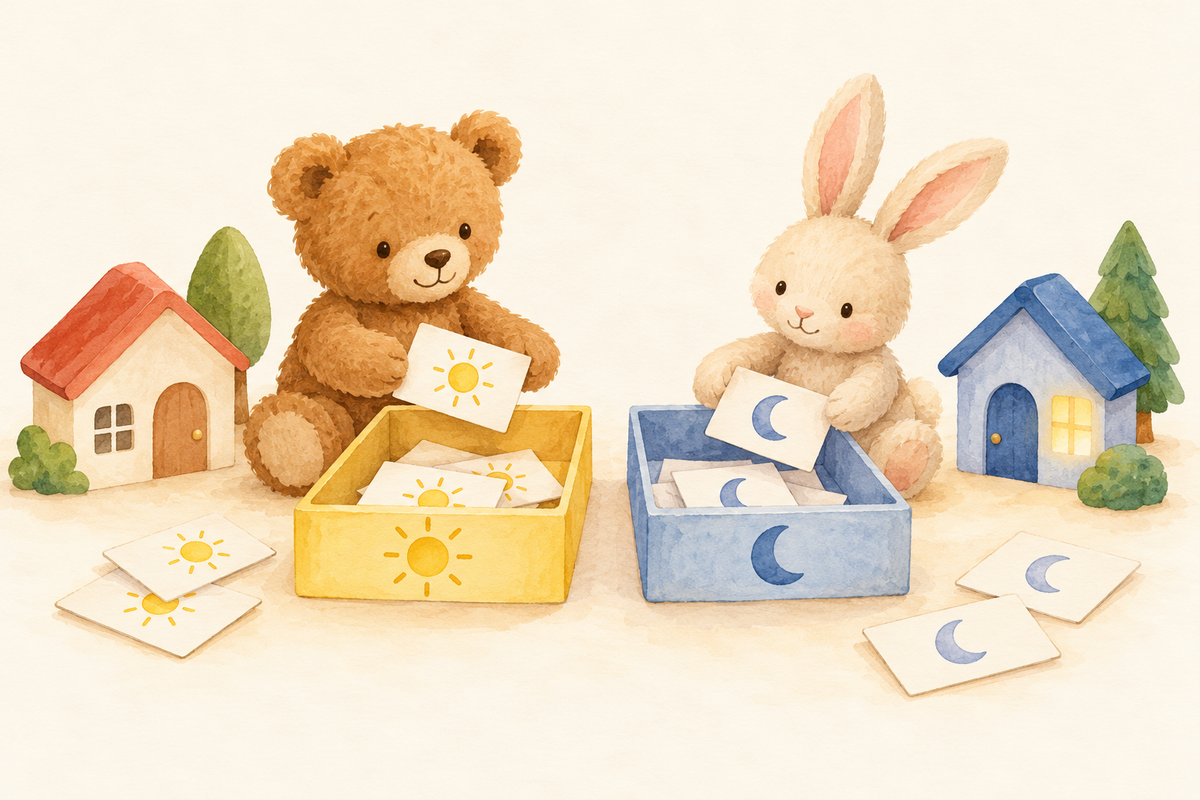
Choose two toy characters, or draw two characters on paper. Place each beside an open container or a separate sheet of paper on your chosen play surface. These are the pretend homes. Keep another small space for the post-office sorting pile.
Invite your child to choose a different mark for each home: perhaps a sun and a crescent moon. Draw the marks on paper and put one beside each character. The marks only need to look different enough for the players to tell them apart. They can be scribbles or invented signs rather than recognisable pictures.
Choose together what the marks mean for this round. Is Bear living at the sun home, or does the sun stand for a whole toy village? If your child prefers to point to a destination instead, use that choice. The game does not depend on remembering a code.
Make a note with somewhere to go
Use another sheet of paper for the post. Your child might draw a message, make a few marks, ask you to write their words or leave the inside blank. Fold the paper and add the chosen destination mark to the outside. An envelope is optional.
Playgroup NSW's mail-box activity includes creating a drawing or letter and folding it into an envelope. Here, the recipients and destinations stay within an imaginary toy world.
Keep the message and the destination as separate choices. A picture of an apple inside does not have to mean that the apple goes to Bear. The outside mark tells the players where this particular note is going, unless your child invents a different rule.
Make just enough post for the round you want. One note can go out and come back as a reply. There is no need to fill every toy home or prepare a pile of matching materials before play begins.
Try one invented delivery round
The following example is made up, rather than a description of a family's experience or a rule about real postal services. Bear lives beside the sun mark and Rabbit lives beside the moon mark. Two folded notes are waiting at the sorting space.
First note: the outside has a sun. The postie places it beside Bear's matching home. Bear opens it and finds a drawing of an imaginary apple. The recipient can reply, keep the note or decide that no reply is needed.
Second note: the outside has a moon. It goes beside Rabbit. The drawing inside is a zigzag, which the player decides means an invitation to the toy café. Nothing needs to be spelled out or interpreted in a particular way.
As the round continues, keep the outside marks available to look at. An adult playing the sorting desk might say, “This one has a moon on the outside,” then wait for the postie's choice. If your child sends both notes to Bear, ask whether the destination has changed rather than correcting the story for them.
You can play a recipient, a postie or the sorting desk, but you do not need to manage every role. Our simple replies for joining pretend play offer ways to take an invited part while leaving the child's story open.
Decide what happens when a home changes
Only add a change if your child wants another round. In this example, Rabbit moves from the moon home to a new star home. A note with the old moon mark is still waiting in the sorting pile. Pause at that one decision: where should it go now?
- Hold it: place the note beside the sorting pile until the player decides where Rabbit lives.
- Change the mark: ask whether the sender wants to redraw the outside for the star home.
- Send it back: return it to the sender and let them choose what happens next.
These are invented play options, not instructions for handling real mail. Your child might choose something else entirely: the moon home becomes a holiday house, both marks belong to Rabbit, or Bear takes the note over. Keep the change visible on the paper instead of turning it into a memory question.
If a changed destination interrupts the version your child wanted, put the moon home back and repeat the familiar round. One straightforward delivery can be the whole game.
Choose a finish you can use again
Let the players decide when the post office closes. The last note could be delivered, returned to the sorting space or left waiting for another day. A story does not need every item resolved before you stop.
Keep the home marks and folded notes together if your child wants to reuse them. Next time, change one detail rather than rebuilding the whole setup: a new recipient, a different mark or an unexpected reply.
If your child wants to keep a record of the imagined event, our toy picture story guide is a separate next activity. For this game, making and delivering the post is enough; there is no finished book, photograph or worksheet to produce.