

A pretend grocery shop can start with a few play-food items and a sheet of paper. Draw a short picture list, choose a shopper and a shopkeeper, then collect the ingredients for an imaginary meal. When the shopping is finished, bring the basket back to the play kitchen and decide what to cook.
The games below use the same small setup in different ways. Start with the simplest version and let your child change the story; there is no need to finish every activity or turn it into a lesson.
Set up a small shop with what you already have
Choose three or four familiar toy foods, an open basket or tray, paper and drawing materials. A clear section of the floor or a suitable low table can be the shop. Leave room to move between the shop and the pretend kitchen without blocking a walkway.
Use props suited to the children taking part and follow each toy's age guidance and instructions. Leave real coins, loose small pieces and plastic shopping bags out of this setup. An adult can handle any cutting needed for paper materials. A toy till, trolley and dedicated market stand are optional: pointing to the food and saying “paid” works for pretend checkout.
If you are comparing dedicated setups, our toy supermarket collection is a place to browse. Check the individual listing for included pieces, dimensions and age guidance before choosing; the activities here do not depend on a particular set.
Make a picture shopping list you can use again
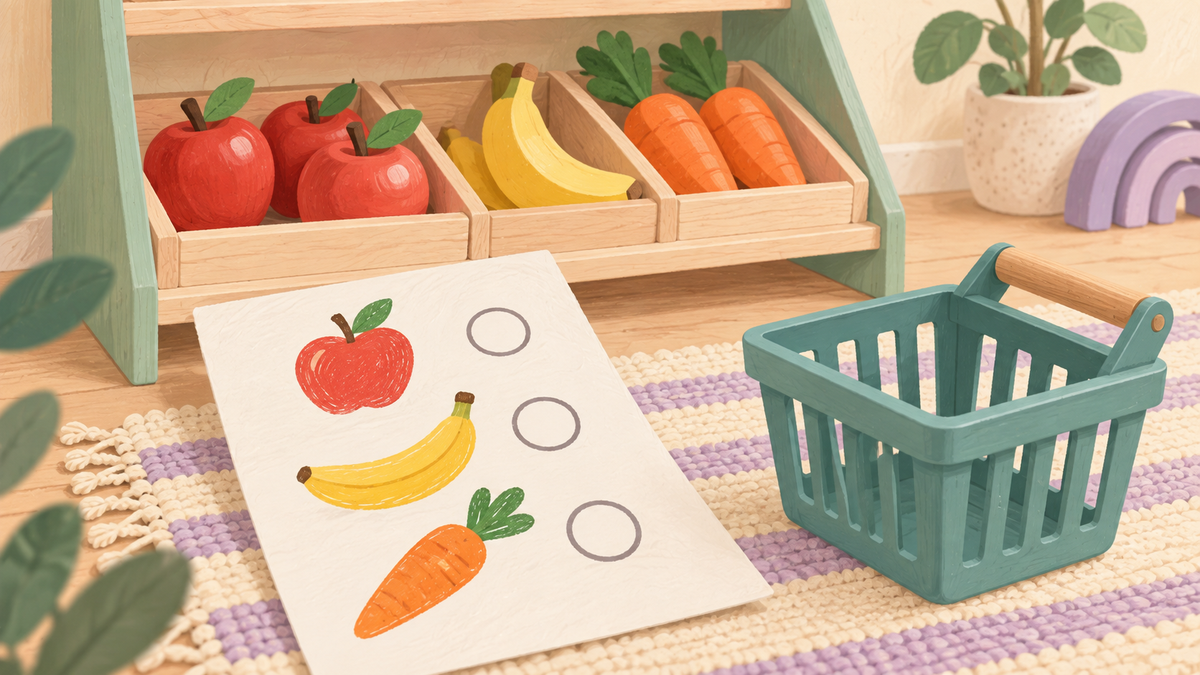
Fold a sheet of paper into three sections. Draw one item in each section, matching the props in your shop: for example, an apple, a banana and a carrot. Leave space beside each picture for a simple mark. Your child can make the drawings, ask you to draw, or tell you which items to include.
Keep the pictures on one sheet so the list stays together. To reuse it without laminating, point to each picture as you find its match and place the matching food beside that section of the sheet. Return the food to the shop after the round. If your child prefers marking the list, use a pencil and erase the marks later.
Playgroup NSW's shopping-list activity suggests children draw the items and adults can add their names. For this pretend version, start with pictures; written labels are optional.
Game 1: Find the food on the list
Place the three foods where the shopper can see them. Offer the list and ask, “What shall we find first?” The shopper chooses an item, matches it to a picture and carries it to the basket or tray. The shopkeeper can help locate anything that is hard to spot.
At checkout, put the list beside the shopping and look together. Try “We have the banana. What else is on our list?” rather than treating a missing item as a mistake. If three items are too much, cover part of the list and look for one food at a time.
Game 2: Shop for an imaginary meal
Give the shopping a purpose: “Our toy café needs something for lunch.” Invite your child to choose a pretend dish and select two or three ingredients from the available play food. Draw that order on a fresh section of paper, or use the matching pictures on your existing list.
For an imaginary fruit plate, the order might be an apple and a banana. For pretend soup, it might be a carrot plus whichever vegetables your child decides belong in it. The recipe does not need to follow real cooking rules. Carry the shopping to the play kitchen, arrange the meal and serve it to an imaginary customer.
Game 3: The shop has run out
Once the basic game feels familiar, ask whether your child would like a shop surprise. Put one item aside before the next round and let the shopkeeper explain that it is unavailable.
- Swap it: “There are no apples today. Would you like a banana?”
- Change the meal: “What could our café make with the food we found?”
- Come back later: “Shall we leave that picture on the list for another trip?”
Accept the shopper's choice, including deciding to restock the missing food straight away. Keep the surprise optional; if your child wants the same shopping routine each time, repeat the familiar version.
Swap roles and change just one detail
After a round, offer to swap shopper and shopkeeper. An adult or sibling can model a short exchange: “Hello. I'd like this one, please.” The other player can answer by speaking, pointing or handing over the item. Playing quietly without dialogue is also fine.
To vary the next round, change one thing: the meal, the order of the pictures or the number of items. A child who wants more detail might draw a receipt or give the shop a name. A child who wants less can simply carry one chosen food from the shelf to the kitchen. Keep the list within easy reach and arrange the shop at a comfortable height for the players.
Close the shop so it is ready for next time
Make the last job part of the story: return the groceries, park the basket and put the picture list with the props. Keep a favourite list rather than making new materials for every session. On another day, your child can reopen the same shop or change what it sells.
For ideas about arranging the wider play area, see our play kitchen corner guide. For a related activity during an actual supermarket visit, Raising Children Network's looking-for-words guide explains ways to involve children in making and using a shopping list.