

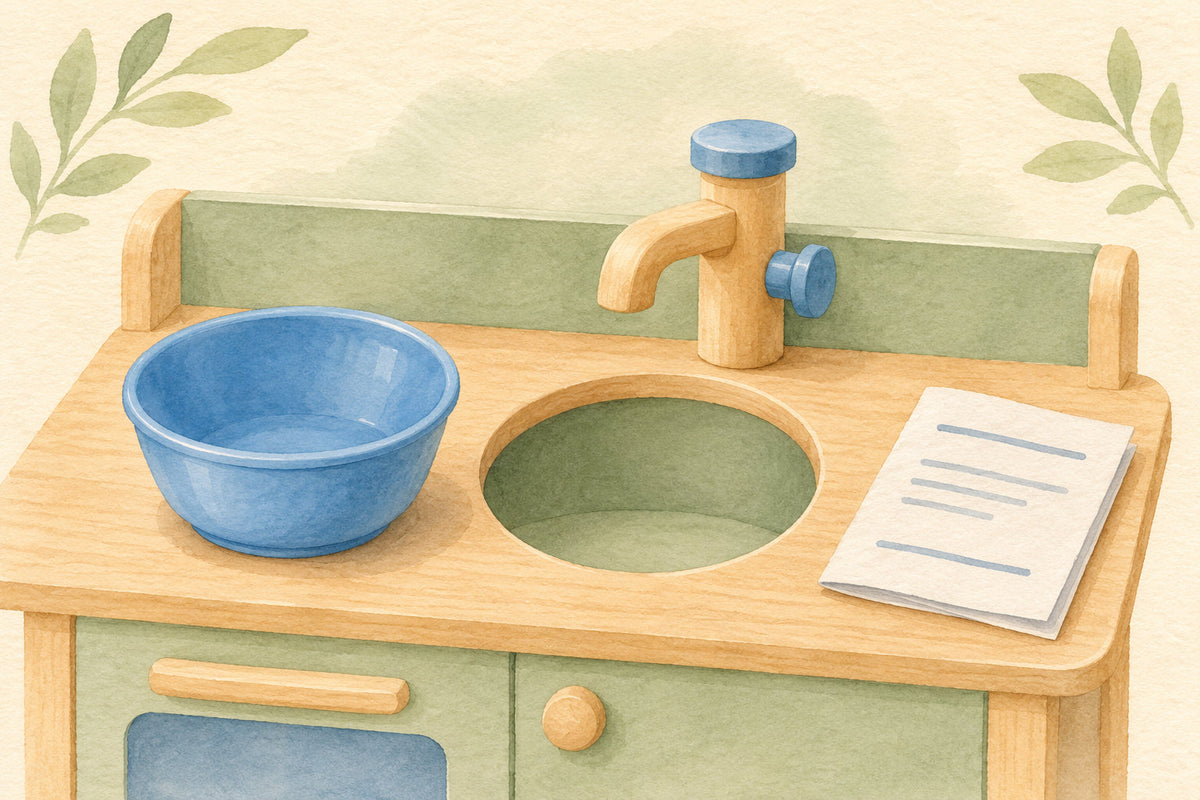
“Removable sink” can sound like a complete answer when you are comparing play kitchens. Before treating it as a feature you will use, find out which part comes out and what the maker expects you to do with it. A bowl, a tap and the surrounding worktop are separate things to identify.
This is a buying check, rather than instructions for taking a kitchen apart. Start with the exact item you are considering, its description, photographs and supplied instructions. Record what is confirmed, leave gaps visible and compare the feature with the way you plan to use the kitchen.
Name the part you want to remove
Point to the component in the product information. Are you asking about the basin that holds the imaginary dishes, the tap behind it, or a larger sink section? Use the maker’s name for the part where one is provided. A photograph of a separate bowl is useful context, but ask whether it belongs to the exact version being sold.
Write one specific question before comparing designs: “Can the bowl be taken out during the normal use described in the instructions?” That is different from asking whether the kitchen has a sink. It also avoids assuming that the tap, rim or worktop comes away with the bowl.
If your plan does not require a removable bowl, mark that too. A feature can be clearly described and still make little difference to your choice. Keep the question connected to your own use rather than adding every advertised detail to a must-have list.
Separate normal use from assembly
A parts diagram can show a bowl as a separate component before the kitchen is assembled. That picture alone does not explain whether the completed kitchen is intended to have its bowl removed during use. Read the relevant assembly, use and care sections together instead of interpreting the loose parts illustration as a demonstration.
Look for an explanation of removal and replacement, not just the word “removable”. If the information leaves the method unclear, record “method not confirmed”. Do not invent a lifting, unclipping or unscrewing procedure to complete the description. You are deciding what to buy from confirmed information, not testing how a fitted part might come away.
Keep any answer with the exact item link and version. Instructions for another kitchen with a similar-looking bowl do not fill the gap. If a seller supplies a document, check that its product name or reference matches the item under discussion.
Keep removal and care as different questions
Taking a bowl out and cleaning it are different actions. Check the care directions for the bowl and for the remaining kitchen separately where the maker distinguishes them. A removable component does not, on its own, tell you that it may be filled, immersed or put in a dishwasher.
For an example of separate information, HipKids’ Gourmet Toy Kitchen description lists a removable sink and gives its product-care direction elsewhere. Read both parts of the information; neither statement describes every play kitchen. The example is a description to examine, rather than a recommendation or a claim about another retailer’s stock.
If water play is part of your buying plan, make that a separate question for the exact kitchen. Keep an unanswered water-use question unanswered even when removal is confirmed. Our guide to checking water use for a toy tea set explains this distinction for a different type of toy; its individual product examples do not establish permission for a kitchen sink.
Compare two imaginary information records
The following example is invented. It shows how to compare the answers you have, rather than suggesting that one sink arrangement is always better.
For Kitchen A, imagine that the exact instructions confirm the bowl can be removed and replaced during normal use. The tap stays attached. The care section gives separate directions for the bowl and the kitchen. Your record now identifies the removable part and where to find its instructions.
For Kitchen B, imagine that the listing says “removable sink”, but the only picture of a separate basin is in the assembly diagram. There is no explanation of routine removal or replacement. Record the advertised wording, then add “normal-use removal not confirmed”. That does not prove the description is wrong; it identifies the answer you still need.
Now return to your priority. If taking the bowl out is essential to your intended routine, Kitchen B needs clarification before it can meet that requirement. If it is optional, you might compare the other confirmed features while keeping the gap visible. A longer accessories list would not answer the missing sink question.
Ask for the missing answer before choosing
You can make the request short and specific: “For this exact kitchen and version, does ‘removable sink’ mean the bowl can be taken out and replaced during normal use after assembly? Which component comes out? Please point me to the relevant use and care instructions.”
Add a water-use question only if it is relevant to your plan. If an answer describes a different item, ask for the matching information rather than carrying the answer across. Keep the reply with the listing and instructions so you can distinguish a confirmed feature from an assumption when you compare your shortlist again.
Once the feature questions are settled, consider the wider arrangement using our play kitchen corner guide. The small decision here remains the same: identify the part, confirm its intended removal and replacement, and keep its care directions attached to the exact kitchen.