

A friend is coming over, and your child wants to show them the play kitchen. Before the doorbell rings, decide which toys will be available during the visit and which special things will be put away. You can make that small plan together without promising that every toy in the house will be shared.
This guide is about preparing the toys for a visit, rather than choosing turns once a game is underway. The questions and pretend café example below are suggestions to adapt. They are not a test your child needs to pass before having a friend over.
Choose the available toys before anyone arrives
Start with a few things your child already enjoys playing with. Ask, “Which of these would you like to have out when your friend visits?” Then ask whether there is anything special they would prefer to put away. A child can point, carry an item to you or answer in words; a written list is optional.
Raising Children Network's toddler friendship guide recommends putting special toys away before friends visit and helping children choose toys and games they are happy to share. It also notes that young children might need reassurance that their own toys will stay at home after the visit.
Keep those two decisions separate: a toy can be available for play during the visit while still belonging to your child. You might say, “These cups are here for you both to play with today. They will stay here when the visit finishes.” Use that wording only when it matches the actual plan.
If your child wants to put most things away, pause the sorting and look for one activity they are willing to offer. There is no need to open every cupboard to make the visit look generous. You and the other adult can discuss a different activity or place to meet if the proposed setup is not working for the visit.
Make the put-away choice clear
Agree where the special items will wait until after the visit. Use your normal storage arrangement; this does not call for a new box or a special display. Put the selected things away before the guest arrives, rather than leaving them in the middle of the available play area.
Talk about the choice plainly: “The little red teapot is put away for today. The blue cups and plates are out.” Avoid announcing that the guest is the reason a precious thing needs protection. The useful information is what is available, not a prediction about what another child might do.
Check the setup once with your child. Are they expecting an item to remain in a particular arrangement? Is something still being used for a private, unfinished game? You can put that item away too, or choose a different starting activity. Do not promise that an elaborate scene will stay untouched if it is being offered for visiting children to use.
Try a simple pretend café example
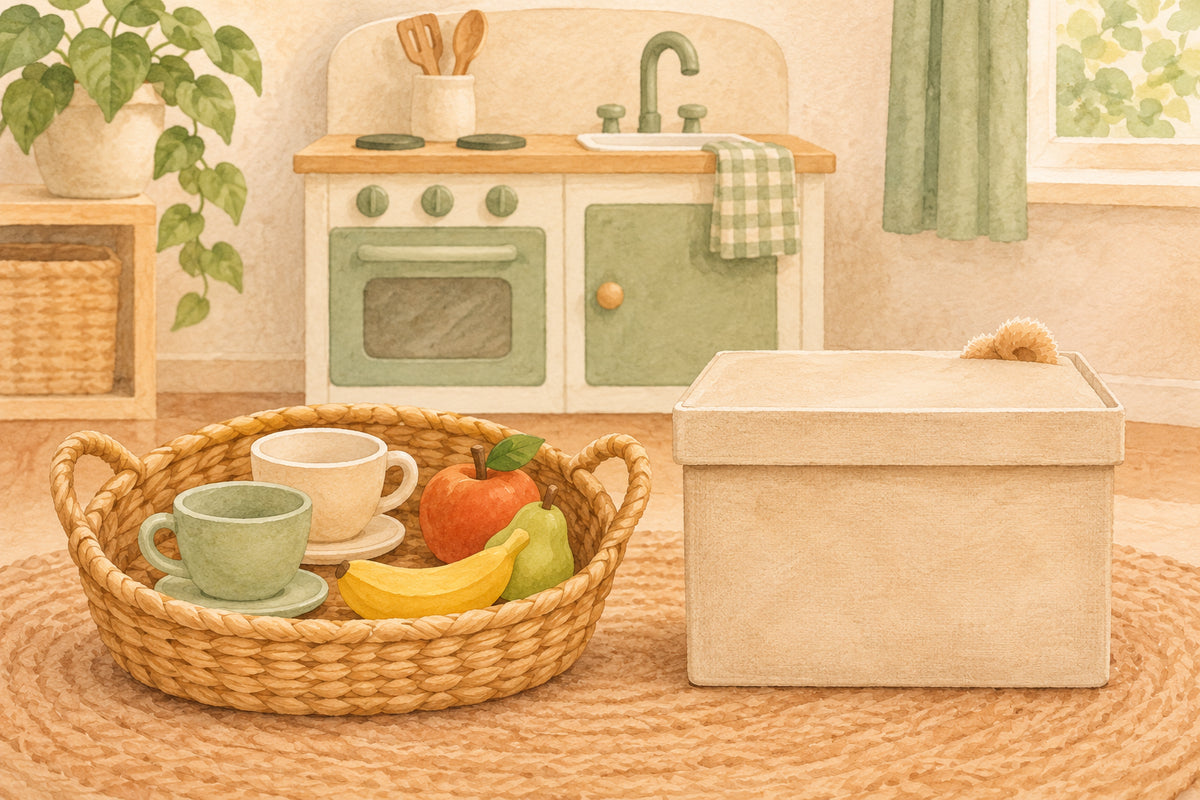
Here is an invented example. Ari wants a friend to visit but does not want the tiny teapot from a special set used in the café. Ari chooses to put that teapot away and leave the usual toy cups and plates available. An adult checks that the items offered suit the children using them and their instructions.
The adult might describe the plan in three short sentences:
- “The red teapot is put away today.”
- “These cups and plates are out for the visit.”
- “They belong here and will stay here when your friend goes home.”
When the friend arrives, show the available activity: “These are the café things for today. What would you like to make?” There is no need to tour the put-away toys or explain Ari's whole decision. The children might make a café, arrange a picnic or choose something else entirely.
This preparation does not settle who holds a particular cup first. If both children want the same piece, help with that immediate situation. Our ideas for sharing a play kitchen cover roles, visible finishing points and side-by-side play. Use a different activity or stop the game if needed; the earlier plan is not a guarantee of an easy visit.
Ask about toys coming from the guest's home
Before the visit, ask the other adult whether the guest is planning to bring a toy. Explain what you already have available, so bringing something is an option rather than an entry requirement. If a special item is coming, ask how the child and adult want it handled.
A short message could be: “We have some pretend café things ready here. Are you bringing any toys? If so, let us know which ones, and we can check with you before including them in the game.” Do not assume that a familiar comfort item is being offered for everyone to use.
At departure, check with the other adult which brought items need to go home. If something is missing, agree how you will look for it and follow up. This is a practical belongings check, not a demand for the children to remember every item themselves.
Keep one useful note for the next visit
Afterwards, ask one small question: “What would you like to have out next time?” You might keep the same selection, put a different special toy away or offer another activity. A difficult moment does not require buying duplicates or replacing the whole setup.
Keep the plan short: what is available, what is put away and which belongings go home with the guest. Make those choices afresh for the next visit, rather than treating today's selection as a permanent promise.