

Before using play kitchen instructions found online, check that the manual belongs to the exact item you are buying or preparing. Keep the kitchen's model details beside the manual's own details. A familiar colour, similar photograph or nearly matching number leaves a question to resolve.
This guide helps an adult find the right manual. It is not assembly instructions, a repair method or proof that a kitchen is complete or suitable. The two worked cases below are invented. Their purpose is to show what a manual match does and does not establish.
Start with the item you need instructions for
Save the exact listing link and copy the brand, product name and item or model reference as they appear. Keep letters, suffixes and punctuation. If a seller calls something an item number, record that label rather than quietly treating it as a model or revision number.
Before purchase, ask the seller for any identifying details missing from the listing. If the kitchen is already with you, use the supplied paperwork and any accessible identification label. There is no need to dismantle it or remove a fitted part to look for a code. Ask the supplier where model details can be found if that is unclear.
Separate what you know from what you have guessed. "Cream kitchen with a red tap" describes an appearance. "Model reference M-42B, as written on the label" records an identifier in this imaginary example. Neither a colour nor a shop's broad category name resolves an unknown model.
Follow the maker's route to the manual
Look for instructions through the maker or the seller handling that exact item. Keep the page from which the manual was linked, as well as the manual itself. That connection gives you something to check later if several downloads have similar names.
For example, Step2's assembly FAQ directs customers to the individual product page for product-specific instructions. Follow that route to find the page for your exact item, and keep the source of any download with it.
For a separate example of a manual's own labels, Step2's Harmony instruction PDF identifies Harmony Kitchen, reference 4419 and a printed date of 09/30/2024. These are details to copy when recording that manual. They do not identify another kitchen or establish that a manual with a similar filename applies to it.
Do not turn this example into a rule about numbering. A shop's SKU, a product model and a manual reference can be labelled differently. If two numbers differ, do not shorten one, remove a suffix or invent a relationship between them. Ask the maker or seller which manual applies to the exact item and version.
Compare the manual before following its steps
Read the manual's opening details and the relevant parts pages before using it as your guide. Compare the product name and references with your item record. Note any version, revision or date that is actually printed. If none is stated, write "not stated" rather than supplying one from the date you downloaded it.
A printed date and the date you saved a PDF answer different questions. A recently downloaded file is not necessarily a newly revised manual. Likewise, a later-looking date on another manual does not establish that it replaces the instructions supplied with your kitchen. Keep both manuals until the supplier clarifies which applies.
Use the parts illustration as another comparison, without using it as a substitute identifier. Look at how the manual names or labels the parts involved in the task. If it shows a different arrangement from the item you have been offered, record that difference. Do not explain it away because the outside of the kitchen looks familiar.
Before buying, you may not have the physical parts to compare. Mark that limit clearly. A seller's confirmation of the model and matching instructions can resolve a question about the listing; it does not replace checking the item and supplied details when they arrive.
Work through two imaginary manual matches
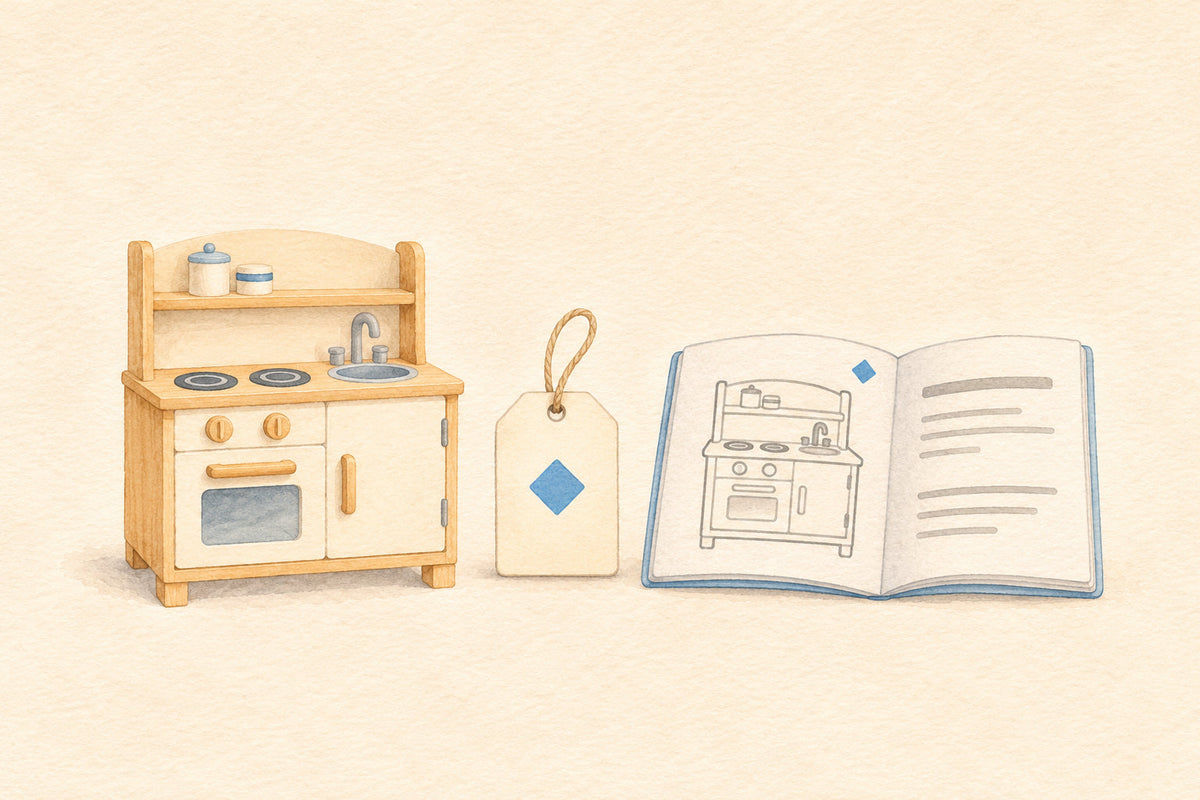
Imagine a listing and label both identify a kitchen as M-42B. A downloaded booklet is headed M-42 and shows a differently arranged cupboard. The colour in its cover picture looks right, but the references do not agree and the drawing adds a second uncertainty.
Your note can say: "Item M-42B; candidate booklet M-42; cupboard arrangement differs; manual match not confirmed." Do not change the item record to M-42 to make it match. Send the two references and the exact drawing difference to the seller. The mismatch does not prove either manual is faulty; it tells you why this one has not been confirmed for your item.
Now imagine a different item identified as R-18. Its maker's product page links a booklet headed R-18. The seller confirms that this is the manual for the version being supplied. You have a clearer trail between the item and the instructions, so keep that page, booklet and reply together.
That second record settles the manual question more clearly. It does not establish that every part has arrived, that another brand's accessories fit or that the toy has passed a safety assessment. If the delivered parts or paperwork differ from the confirmed record, return to the supplier with that difference rather than adapting instructions from another kitchen.
Ask one question that preserves the uncertainty
Give the person answering enough details to identify the item and the candidate manual. A useful request might read:
For the kitchen at this exact listing, the item reference is [reference]. I found a booklet titled [title/reference] at [link], with [printed version or date, if stated]. Can you confirm whether it applies to the version you will supply? The detail I cannot reconcile is [exact difference]. Please send the right instructions or explain the correct manual reference.
Keep order numbers, receipts and private contact details in the direct conversation. A public comment is not needed to resolve the manual match. If the reply simply repeats the product name, the unexplained reference or part difference remains an open question.
If the supplier cannot identify the right instructions, leave that setup task unresolved. Do not improvise an assembly sequence, replacement fastening or care method to close the gap. This comparison helps you ask for the right details; it does not create missing directions.
Keep the confirmed details with the kitchen
Save the confirmed item link, identifier, manual and supplier clarification together in a place the preparing adult can find. Label an old or unconfirmed download clearly so it is not mistaken for the chosen instructions. When passing the kitchen to another household, explain which record is confirmed and which question remains open.
For an item being bought used, our second-hand play kitchen checklist covers the wider condition, contents and collection questions. Keep those decisions separate from finding the applicable manual.
Once the manual is identified, use its own directions for the task you need. If you are preparing powered features, our part-by-part battery planning guide shows a separate way to record stated requirements. A confirmed manual is a starting point for that task, not a reason to copy requirements between models.
Aim to keep one clear link between a kitchen and its manual, with any differences still noted until they are answered. Keep the explanation attached to the exact kitchen rather than relying on the closest-looking search result.