

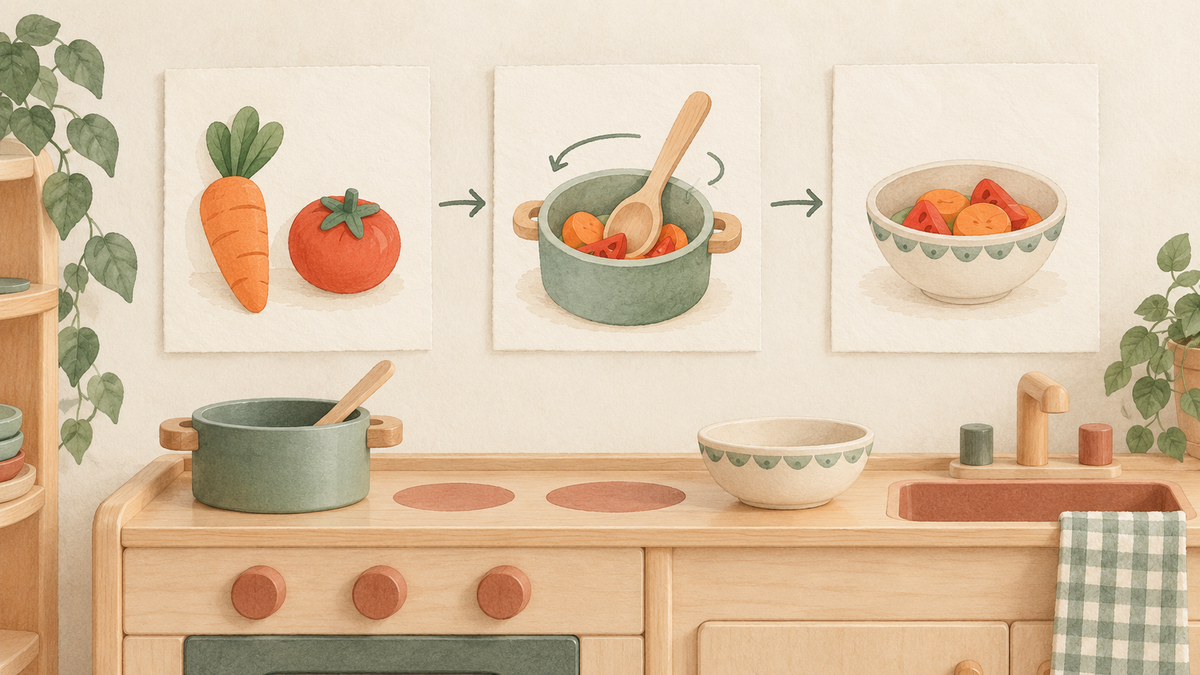
A pretend recipe card gives a toy meal a beginning, a middle and an ending. It can be as simple as three drawings: choose the play food, stir it in a toy pot, then serve it in a bowl. You do not need a printer, a new food set or a realistic recipe.
This guide shows you how to make cards around the play food you already have, with three original examples and a blank layout to copy. These are imaginary meals for toy-kitchen play, not instructions for preparing or eating real food.
Start with the toys on your shelf
Choose one pretend meal and set out the toys it will use. For example, a toy carrot, a toy tomato, a pot, a spoon and a bowl are enough for vegetable soup. If those pieces are not in your set, choose something else together. A drawing should represent the child's actual play pieces rather than send you shopping for missing ingredients.
Use paper or card and a drawing tool. An adult can prepare the card and any cutting. Keep the play setup appropriate for your child and follow the toys' age guidance and instructions. Leave real heat, food preparation and loose craft decorations out of this activity.
Make a three-picture recipe
- Name the imaginary dish. Write a short title at the top. Let your child choose a name such as “Garden Soup” or “Café Lunch”.
- Divide the page into three large boxes. Arrange them in a row or from top to bottom, whichever fits your space. Leave room for clear drawings.
- Draw one action in each box. Show the play food going into the pot, a spoon stirring, and the finished bowl. Simple outlines are fine.
- Add a short action word if useful. “Add”, “stir” and “serve” are enough. Read them aloud together; the pictures can carry the instructions.
- Try the card beside the toys. If a picture is unclear, redraw it or replace it with your own photograph of that step. Photograph the toys only if you do not want people in the card.
The Texas Education Agency's dramatic-play activity sheets include picture recipes and children creating recipes for others. The layouts below are our own suggested examples for home play; they do not promise a particular learning outcome.
Three pretend recipes to draw
Garden Soup: add, stir, serve
Gather: two toy vegetables, a toy pot, a spoon and a bowl. In box one, draw the vegetables above the pot. In box two, draw the spoon in the pot with a curved arrow. In box three, draw the bowl ready to serve. There is no need to add water or switch on a real appliance.
Fruit Café: choose, arrange, offer
Gather: toy fruit and a plate. Draw the available fruit in the first box, the fruit arranged on the plate in the second, and the plate at the pretend café counter in the third. Offer the imaginary dish to a customer. Change the pictures to match whichever fruit pieces are in your set.
Chef's Surprise: pick, make, reveal
Gather: a few suitable play-food pieces and toy dishes. Draw a question mark in the first box, a pot or plate in the second, and an empty space for the finished dish in the third. Your child chooses the ingredients, invents a meal and then draws what they made. The finished card becomes a recipe someone else can try.
A blank layout you can copy
My pretend dish: ____________________
Toys I will use: ____________________
Picture 1 — First: ____________________
Picture 2 — Next: ____________________
Picture 3 — Ready to serve: ____________________
One thing I changed: ____________________
Copy this layout onto a single sheet. Keep the drawings large enough to see from the play surface. Start with one card, then make another only if your child wants one.
Let the card change with the game
If three steps feel cumbersome, use two pictures: make and serve. If your child wants more detail, add a separate picture for finding the bowl or setting the table. When an ingredient is missing, draw a substitute rather than treating the recipe as wrong. The card is a prompt for play, not a test to complete.
Keep favourite cards flat together near the play kitchen and put unused ones away with the other play materials. A picture shopping list serves a different purpose: gathering items before cooking. If that is the game your child wants, try our pretend grocery shopping games.
When choosing extra pieces, check the individual details in our play kitchen accessories collection against the toys and space you already have. A recipe card can work with a small existing setup; it does not require a complete new kitchen.