

Introduction
If you’re a parent, guardian, or caregiver, you already know that baby-proofing your home is a top priority. Once your little one starts crawling or walking, every corner becomes a new adventure—and a potential hazard. Among the most essential tools in your baby-proofing arsenal is the baby gate. But choosing the right type can feel overwhelming with so many options out there. Two of the most popular types are pressure mounted and no drill baby gates. While they might seem similar at first glance, each comes with its own set of pros and cons.
So, what exactly are these gates? How do they differ? And most importantly, which one is right for your home and your child’s safety? This comprehensive guide is here to break it all down for you. We’ll explore what makes each gate unique, where they work best, and the benefits and drawbacks of each. Whether you're living in a rental apartment or your forever home, by the end of this article, you'll know exactly which gate suits your needs.
Let’s dive into the baby gate debate: pressure mounted vs no drill!
Understanding Baby Gates
What Is a Baby Gate?
A baby gate is a safety device designed to block off areas of your home that might be dangerous for babies and toddlers. Think of it as a child-sized barrier that prevents access to staircases, kitchens, fireplaces, or rooms with fragile or unsafe items. Baby gates are typically made from materials like metal, plastic, or wood, and they come in a range of sizes to accommodate different doorway widths.
What makes baby gates especially useful is that they allow adults to move freely between rooms while keeping curious little explorers contained. Some gates come with doors that swing open; others are step-over models that require a bit more agility on your part. Either way, their main goal is to provide peace of mind.
Parents often start using gates once their child becomes mobile—usually around 6 to 9 months old—and keep them in place until about age 2 or when the child learns how to climb over them (yep, they’re crafty like that).
Common Uses in Households
Baby gates can be installed in a wide variety of places, depending on your home layout and your child's behavior. The most common areas include:
-
Top of Stairs: Prevent dangerous falls.
-
Bottom of Stairs: Stop children from climbing upward unsupervised.
-
Doorways to Hazardous Rooms: Kitchens, bathrooms, or offices.
-
Wide Openings or Hallways: Especially in open-concept homes.
Some families even use baby gates to keep pets separate from children or certain parts of the house. In essence, they’re versatile tools for managing movement and maintaining safety.
What Are Pressure Mounted Baby Gates?
How Pressure Mounted Baby Gates Work
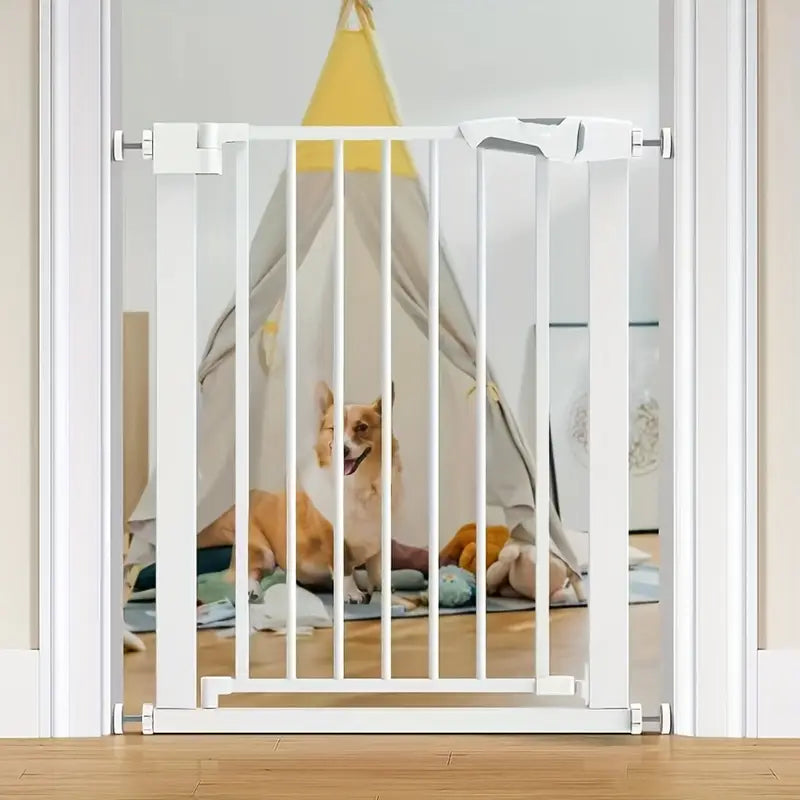
Pressure mounted baby gates use tension to stay in place. They have rubber or silicone pads on each end that press against the walls or door frame, holding the gate securely without the need for screws or drilling. Think of it like a spring-loaded curtain rod—but stronger and designed to withstand the push of a determined toddler.
This type of gate is ideal for situations where you want a temporary, non-permanent solution. It doesn’t leave marks (usually), and installation is a breeze. Most pressure mounted gates can be set up in minutes without tools. Just turn the knobs to increase tension, and voilà—your gate is in place.
Some advanced models even include a walk-through door with a latch, making it easier for adults to pass through without removing the gate each time.
Where to Use Pressure Mounted Gates
Pressure mounted gates shine in doorways and hallways where there’s a solid, flat surface on both sides. They’re perfect for:
-
Between rooms
-
Hallways
-
Bottom of stairs (NOT the top!)
-
Apartment settings where drilling isn’t allowed
However, it’s important to note that pressure mounted gates are not recommended for the top of stairs. Why? Because they don’t offer the permanent anchoring required to keep the gate in place if a child leans on it or tries to climb it. A small shift could lead to a dangerous fall.
These gates are best when you're looking for flexibility and ease of use, especially in temporary living situations or if you plan to move the gate from one spot to another frequently.
What Are No Drill Baby Gates?
No Drill Gate Mechanism Explained
No drill baby gates are a broader category that includes pressure mounted gates, but also newer designs that use adhesive pads, suction cups, or innovative locking systems that allow installation without any holes or permanent fixtures. Essentially, they cater to the same audience—people who want to avoid damaging walls—but they may differ in how they stay put.
Some no drill gates use retractable mesh that locks into place with tension and adhesive brackets. Others rely on high-strength suction or clever engineering that uses leverage against surrounding surfaces. They're often lightweight and easy to install but still provide a decent level of protection.
Keep in mind, though, the term "no drill" doesn’t always mean “super sturdy.” These gates can vary widely in terms of build quality and resistance, so it’s crucial to read reviews and test the product thoroughly. For a detailed comparison of top-rated models, check out this buying guide and review of the best retractable baby gates in Australia to help you make the right choice.
Typical Locations for No Drill Gates
Just like pressure mounted gates, no drill options are well-suited for areas where you can apply even pressure or stick adhesive components without risk:
-
Door frames
-
Hallways
-
Kitchen entrances
-
Rental properties
They’re especially appealing to renters or those who want a minimalist look without holes, screws, or mounting hardware. Many modern no drill gates are also designed to blend seamlessly with your home decor, offering a sleek and subtle way to keep your little one safe.
Pros of Pressure Mounted Baby Gates
Easy Installation
One of the biggest advantages of pressure mounted baby gates is how incredibly easy they are to set up. Seriously, if you can twist a knob, you can install one. No power tools, no screws, no measuring levels or wall anchors—just place the gate where you want it and twist the tension knobs until it’s snug. Done.
This makes them especially convenient for busy parents who don't have time to fumble around with instruction manuals. You can even move the gate around the house depending on where your child is playing that day. It’s like a portable safety system.
Not to mention, the quick setup means less stress and more flexibility. Hosting friends for dinner and want to close off the kitchen? Boom—gate up in 2 minutes. Need to move it to the hallway the next morning? Done.
Damage-Free for Most Surfaces
Because pressure mounted gates don’t require drilling or screws, they usually leave your walls and doorways in pristine condition. The rubber or silicone pads on the ends protect surfaces from scratches and marks, which is a huge win—especially if you’re renting or just had your walls freshly painted.
Of course, this doesn’t mean there’s zero chance of damage. Over time, repeated use or over-tightening can leave minor scuffs, but compared to hardware-mounted options, the damage is virtually nonexistent.
This is a lifesaver for people living in apartments or anyone who values their walls and doorframes. Plus, when you remove the gate, you don’t need to fill holes or repaint. That’s a win-win.
Portability and Flexibility
Pressure mounted gates are lightweight, making them easy to move from room to room or even to take on trips. Heading to Grandma’s house for the weekend? Toss it in the car. Staying in a vacation rental? Bring your gate along for a stress-free stay.
They’re also ideal if you have multiple children or pets and want to redirect access throughout the day. You’re not stuck with a fixed solution—you can adapt your setup to suit your daily routine.
Their flexible nature also means you can test out different gate positions before committing. Want to see if it works better in the hallway or the kitchen? Try both! No drill holes, no regrets.
Cons of Pressure Mounted Baby Gates
Limited Use for Top of Stairs
Let’s get this straight—pressure mounted baby gates should never be used at the top of stairs. It’s one of the most critical safety rules when it comes to gate installation. Why? Because pressure-mounted designs rely solely on surface tension. If a child or even a pet pushes hard enough, there's a risk the gate could give way and fall. And when that happens at the top of a flight of stairs, the consequences can be disastrous.
Some gates come with extension kits or optional hardware mounts, but even then, the core design isn't ideal for stair tops. Safety organizations like the JPMA (Juvenile Products Manufacturers Association) consistently recommend hardware-mounted gates for this purpose because they screw directly into the wall or banister, providing rock-solid stability.
So, if your primary goal is to block off the top of the stairs, a pressure mounted gate just isn’t worth the risk—opt for a drilled, hardware-mounted version instead.
Stability Concerns with Active Toddlers
Pressure mounted gates are great for babies and even docile toddlers. But if your little one is particularly adventurous—or, let’s face it, a bit of a climber—you may run into some stability issues. The moment a toddler realizes they can push, shake, or rattle the gate, it can become a game of strength and persistence. And in this match-up, physics is not on your side.
Even if the gate doesn’t fall immediately, constant pressure and jiggling can loosen the tension over time. You may find yourself having to readjust and retighten the gate multiple times a day, especially in high-traffic areas.
In short, pressure-mounted gates are best for younger babies or short-term use, but they might not hold up under the relentless curiosity of an older toddler or energetic child.
Not Ideal for Uneven Surfaces
Do you have baseboards, wainscoting, or uneven flooring where you want to install your gate? Pressure mounted baby gates might not be your best friend. Because they rely on even, flush surfaces for maximum tension, any gaps or misalignments can make them wobbly or ineffective.
In cases where there’s a slight difference in height between the top and bottom mounting points, the gate may sit crooked, compromising its stability. Some models come with adjustable panels or extenders, but even then, it can be a hassle to get everything aligned just right.
This is especially problematic in older homes, which often have charming (but uneven) architectural quirks. In these cases, you may be better off with a custom-fit gate or a hardware-mounted version that can adapt to structural irregularities.
Pros of No Drill Baby Gates
Ideal for Renters
One of the biggest headaches for renters is finding child-proofing solutions that don’t leave a permanent mark. Landlords usually frown upon drilling holes into walls or stair banisters, and no one wants to lose their security deposit over a baby gate.
That’s where no drill baby gates really shine. They offer a truly temporary, damage-free way to keep your child safe without altering the home. Since they rely on adhesives, suction mechanisms, or creative friction-based engineering, you can install and remove them without a trace.
This also makes them a fantastic option for temporary living situations—whether you're staying with relatives, in a short-term rental, or just moving frequently. No drill = no commitment = ultimate flexibility.
Aesthetic and Clean Look
Let’s be honest—baby gates aren’t exactly the most stylish home decor element. But no drill gates tend to be sleeker and more modern-looking than their hardware-mounted cousins. Many are designed with neutral colors, minimalist frames, or even transparent mesh to blend seamlessly with your interior design.
Instead of clunky bars and brackets, you’ll find slim profiles and clean lines that don’t scream “toddler zone.” This is a big plus for homeowners who are picky about aesthetics or want to maintain a certain visual flow in open-concept spaces.
In addition, since there are no screws or external fixtures, there’s less hardware visible—another win for the design-conscious parent.
No Tools Required
Forget the toolbox—most no drill baby gates don’t require a single screwdriver. Whether it’s a tension-based system or an adhesive lock, setup is usually as easy as peel-and-stick or twist-and-lock.
This makes installation a total breeze, even for folks who aren’t particularly handy. Plus, you don’t have to worry about drilling into studs, aligning brackets, or figuring out which side of the gate should swing open. It’s all designed for simplicity and ease.
Even better, many models can be uninstalled just as quickly, which is perfect for families who need to gate-proof only certain times of day or during specific activities. Hosting guests for dinner? Pull it down. Nap time over? Put it back up in seconds.
Cons of No Drill Baby Gates
Less Secure for Certain Areas
Here’s the honest truth: not all no drill gates are created equal. While some offer decent security, many just don’t hold up when placed in high-risk areas like the top of stairs. Without hardware anchoring them into the wall or banister, there's always a slight risk of slippage, especially if a toddler leans on or climbs the gate.
This means no drill gates are typically not recommended for the top of stairs. They’re much better suited for flat doorways, between rooms, or areas where the risk of falling is minimal.
Even with adhesive models that claim high weight tolerance, extreme temperature changes or wear-and-tear can compromise the stickiness over time, making them unreliable when you need them most.
Can Be Prone to Shifting
Some no drill gates, especially those using adhesive pads or suction cups, can shift over time. Factors like dust, pet hair, humidity, and repeated use can reduce their effectiveness. The last thing you want is for your gate to pop off while your child is playing nearby.
In fact, you may find yourself reapplying adhesive or repositioning the gate frequently—especially in high-traffic areas or homes with other young kids or pets. It's not a deal-breaker, but it’s definitely something to keep in mind.
So while no drill gates are incredibly convenient, they do require a bit more monitoring to ensure they remain secure day after day.
Limited Style and Material Options
Compared to traditional baby gates, the selection of no drill models is still relatively small. You’ll mostly find them made of plastic or mesh, which might not match every home’s aesthetic. And if you’re looking for something heavy-duty or particularly wide, your options may be even more limited.
Manufacturers are catching on and releasing more stylish and varied models, but as of now, the range isn’t quite as broad as what you’d find with hardware-mounted or pressure-mounted gates. If you’re picky about looks or need a custom fit for a unique space, you might find the options a bit underwhelming.
Pressure Mounted vs No Drill Baby Gates: Key Differences
Installation Process
Let’s compare apples to apples. Both pressure mounted and no drill baby gates are designed for easy installation, but the way they achieve that is slightly different.
Pressure mounted gates use physical tension—twist the knobs until the rubber ends grip the doorway, and you’re done. The simplicity is part of their appeal, but it does require a solid, flat surface to press against. You’ll want to check occasionally that the pressure remains strong, especially if the gate is being pushed or bumped often.
No drill gates, on the other hand, often rely on adhesives or suction mechanisms. Some versions use a combination of sticky pads and telescoping tension rods. These are even easier to install—just peel, stick, and lock—but they can be more vulnerable to shifting over time. Also, you need to be cautious about the surfaces you're sticking them to—painted walls, for instance, may not be ideal.
Bottom line? If you want something you can trust to stay put with a bit of maintenance, go pressure-mounted. If you want the fastest, most surface-friendly option, go no drill.
Durability and Strength
When it comes to pure strength, pressure mounted gates generally win. The mechanical tension provides a sturdier hold than most adhesive-based solutions. Some pressure-mounted models can even stand up to adult force (though you really shouldn’t be leaning on them regularly).
That’s not to say no drill gates are flimsy—many are surprisingly strong—but their strength often depends on how well the adhesive bonds and what kind of surface you’re working with. Over time, especially with repeated removal and reapplication, the adhesive may weaken.
So, if durability and long-term use are your top concerns, pressure-mounted is the more rugged choice.
Child Safety Levels
Safety is the end game here, and both gate types offer solid protection when used correctly and in the right setting.
Pressure mounted gates are safer in mid-level risk areas like hallways or room entries. They’re not ideal for stair tops but offer dependable protection in everyday spaces. Their strength and ability to fit securely between two sturdy surfaces give them a strong advantage.
No drill gates shine in low-risk zones—think bedrooms, kitchens, or playrooms—especially for younger babies who aren’t climbing yet. They're a great pick for renters or temporary solutions, but may not be the best fit for households with high-energy toddlers.
The key takeaway? Choose the gate that best matches the environment and your child’s behavior. There’s no one-size-fits-all.
Best Scenarios for Using Each Type
When to Choose Pressure Mounted Gates
Pressure mounted baby gates are the go-to for anyone needing a non-permanent yet sturdy solution. They're especially ideal if:
-
You want to block off hallways or between rooms
-
You don’t want to drill into walls but still need decent strength
-
Your child is getting more mobile but isn’t climbing just yet
-
You want a gate that’s easy to move and reposition
These gates are excellent for first-time parents, folks who like to rearrange furniture and setups often, or anyone who’s just not ready to make permanent modifications to their home.
They're also perfect for pet containment, since dogs and cats often respect physical barriers more than you’d expect (especially if there's no jumping involved).
Just remember, if your kiddo is a climber or you need a gate at the top of the stairs, this may not be the best fit.
When to Choose No Drill Gates
No drill baby gates are a fantastic solution for low-risk areas or aesthetically sensitive spaces. You should opt for one if:
-
You’re living in a rental or short-term lease
-
You want something that’s completely damage-free
-
You’re tight on time and want an ultra-quick installation
-
You only need the gate part-time or temporarily
They’re also excellent for secondary barriers—for example, keeping toddlers out of a laundry room, a bathroom, or off-limits sections of the kitchen.
And if you’re into minimalist design or have an open-plan home with modern decor, many no drill gates blend in seamlessly, adding function without visual clutter.
Just be sure to monitor the gate’s position regularly, especially if you’re dealing with an active little one or heavy traffic area.
Top Brands and Models
Recommended Pressure Mounted Gates
There are a few standout pressure mounted baby gates that consistently get rave reviews for quality, safety, and ease of use:
-
Regalo Easy Step Walk Thru Gate
-
Budget-friendly, sturdy, and super simple to install.
-
Ideal for hallways and doorways.
-
-
Summer Infant Multi-Use Deco Extra Tall Walk-Thru Gate
-
Sleek design with added height (for climbers).
-
Versatile enough for pets too.
-
-
Munchkin Easy Close XL Metal Baby Gate
-
Comes with multiple extensions to fit wider spaces.
-
Dual-locking system for extra safety.
-
These models offer great durability and flexibility without requiring tools or drilling.
Recommended No Drill Gates
For no drill options, the market is a bit more niche, but there are still some solid choices:
-
Play Kitchen Retractable Mesh Baby Gate
-
Stylish and space-saving design that retracts fully when not in use.
-
No drilling required—uses adhesive or pressure-based installation methods.
- Ideal for renters or anyone seeking a minimalistic, damage-free gate solution.
-
-
Evenflo Soft and Wide Baby Gate
-
Fabric mesh style, perfect for temporary use.
-
Adjustable and gentle on walls.
-
-
Safety 1st Adhesive Magnetic Locking System
-
Technically not a gate, but great for no-drill childproofing combined with a flexible barrier.
-
These are ideal for renters, vacation homes, or stylish spaces where visual appeal and zero-damage setup are a must.
Tips for Choosing the Right Baby Gate
Safety Certifications
First and foremost, don’t skip the fine print. Any baby gate you buy should meet safety standards and certifications from reputable organizations. Look for labels like:
-
JPMA Certified (Juvenile Products Manufacturers Association)
-
ASTM Compliance (American Society for Testing and Materials)
These certifications ensure the product has been tested for strength, durability, and child safety. If a gate doesn’t list these details? Walk away.
Also, consider the spacing between the bars (no more than 3 inches), latching mechanisms (should be childproof but easy for adults), and height (at least 22 inches tall) to make sure your little one stays safely contained.
Matching Gate Type to Home Setup
Your home layout plays a big role in choosing the right gate. A pressure mounted baby gate won’t do you much good on a staircase with wrought-iron railings, just like a wide-open floor plan might require extensions or a freestanding play yard instead of a standard gate.
Ask yourself:
-
Are my walls flat and sturdy?
-
Do I need a gate to be portable or fixed?
-
Is this for a high-risk area like stairs or just a general block-off point?
Once you answer these questions, matching the right type of gate becomes a lot easier—and a lot less overwhelming.
Considering Your Child’s Age and Activity
The age and activity level of your child is the final puzzle piece. For younger babies who are just learning to crawl, a basic no drill or pressure-mounted gate is likely enough. But once your child starts walking, climbing, or charging full-speed into everything, you need something sturdier.
Here’s a quick breakdown:
-
Crawlers (6–12 months): Basic no drill or lightweight gates.
-
Early walkers (12–18 months): Stronger pressure mounted gates.
-
Toddlers (18 months+): Tall, hardware-mounted, or hybrid models for safety and stability.
Your baby’s mobility is ever-evolving—so think ahead when choosing a gate, and don’t be afraid to upgrade when needed.
DIY Alternatives to No Drill Gates
Temporary Gate Solutions
Sometimes, you just need a quick, affordable fix. Maybe you’re visiting family or staying somewhere short-term. In those cases, a DIY solution might be all you need.
Try these ideas:
-
Tension shower curtain rods with fabric attached
-
Stacked ottomans or low bookshelves as makeshift dividers
-
Freestanding play yards to block off large open areas
They won’t win style points, but they’ll buy you time and peace of mind—just make sure they’re secure enough that your child can’t knock them over easily.
Custom-Made Baby Barriers
If you’re handy or know someone who is, you can create a baby gate tailored to your space. Some parents use reclaimed wood or PVC pipe to build gates that fit oddly shaped doorways or stairs.
There are also companies that offer custom-fit gates if you’re dealing with unique architecture. These solutions may cost a bit more, but they’re often safer and more reliable than trying to force a standard gate to work in a non-standard space.
Just remember: custom or DIY doesn’t mean cutting corners on safety. Make sure every piece is stable, smooth, and free of choking or pinching hazards.
Final Thoughts
Choosing between pressure mounted and no drill baby gates isn’t about which one is better overall—it’s about what works best for your home, lifestyle, and child. Pressure mounted gates offer strength and flexibility for more permanent spaces, while no drill gates provide ultimate convenience, especially for renters and temporary setups.
Each option has its own strengths, from easy setup and portability to clean aesthetics and damage-free design. The key is understanding your needs—where you’ll use the gate, how long you’ll need it, and how active your little one is.
At the end of the day, baby gates are all about peace of mind. Whether you go pressure-mounted, no drill, or even custom DIY, what matters most is creating a safe space where your child can explore without danger—and where you can relax knowing they’re protected.
FAQs
1. Are pressure-mounted baby gates safe for the top of stairs?
No, they’re not recommended. For the top of stairs, only use a hardware-mounted gate for maximum stability and safety.
2. Can no drill baby gates really hold against strong toddlers?
Some can, but it depends on the model and installation surface. Always check weight limits and reviews before buying.
3. Which gate type is better for apartments?
No drill baby gates are best for apartments because they leave no marks and are easy to install without tools.
4. What is the average lifespan of a baby gate?
Most baby gates last between 1.5 to 3 years depending on usage, materials, and how quickly your child outgrows the need.
5. Can you convert a pressure mounted gate into a hardware-mounted one?
Some models offer optional hardware kits, but not all. Check the manufacturer’s details before trying to convert.